PU Insulated Sandwich Panels
Published 15 Nov 2025 · Updated 2 Sept 2026 · 5 min read
Let us introduce you to an innovation that is revolutionising construction while helping to fight global warming: the “thermal insulated sandwich panel”, which many people may know by its English name, Insulated Sandwich Panel. It is not just an ordinary insulation board, but a material of its time that delivers strength, energy savings and environmental friendliness.
Getting to know it beyond the name: what is a sandwich panel?
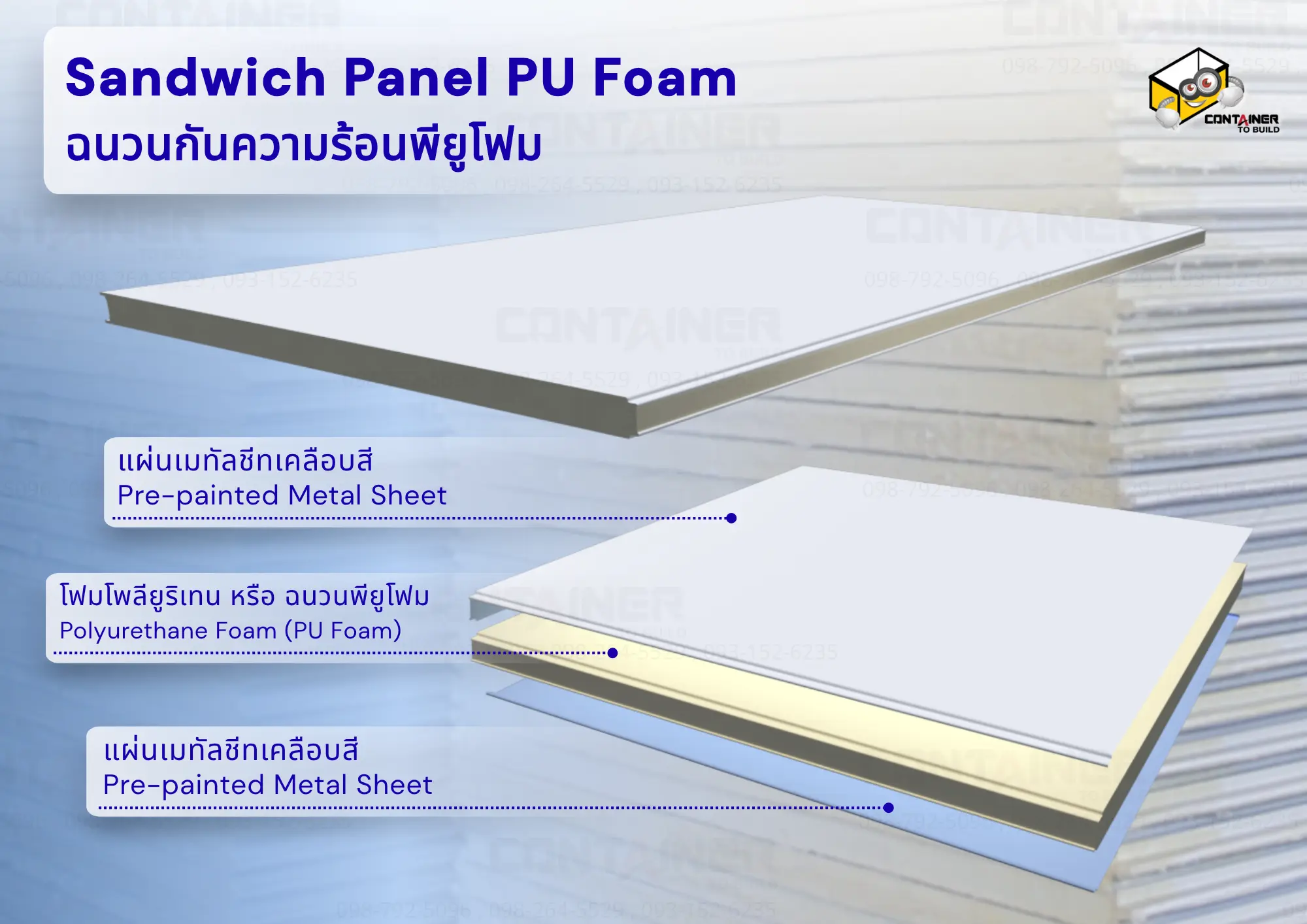
To picture it, a sandwich panel is like the sandwich we all know. It consists of two “face sheets” made of strong materials such as galvanised steel sheet, aluminium sheet or fibre cement board, like the two slices of bread. In the middle is the “core insulation”, made of a material with excellent heat-insulating properties, such as polyurethane foam (PU), polyisocyanurate foam (PIR) or rock wool, which acts like a filling that is both satisfying and delicious.
What makes it special is that it is produced using a high-tech process called “Continuous Lamination”, in which the face sheets and insulation core are pressed together under heat and pressure so they bond into a single piece. The result is a panel that is strong, lightweight and offers complete insulation performance.
Opening the box of innovation: why are sandwich panels unlike anything else?
In a market with so many material options, why are sandwich panels worth watching, and how do they differ from conventional insulation such as fibreglass batts or ordinary foam boards? The answer lies in combining many top-quality properties in a single material.
- Superior Thermal Insulation: An insulation core such as PIR foam has a very low thermal conductivity (K-value or lambda value, approximately 0.022 – 0.028 W/m·K), compared with concrete or brick, which are dozens of times higher. This value expresses the ability to resist the flow of heat: the lower it is, the better the insulation. Buildings made with sandwich panels stay cool in summer and warm in winter while using noticeably less energy for air conditioning or heating. Some projects have been able to reduce the electricity cost of cooling by as much as 30-40%.
- Remarkably strong yet lightweight (High Strength-to-Weight Ratio): The sandwich structure gives a high level of strength relative to its very light weight. Its engineering design lets it resist compression and tension well. Panels 50-100 millimetres thick can be used with confidence as walls or roofs for large buildings such as warehouses, distribution centres and industrial buildings, without the main structure having to carry as much weight as brick-and-plaster walls, which further reduces the cost of the foundations and columns.
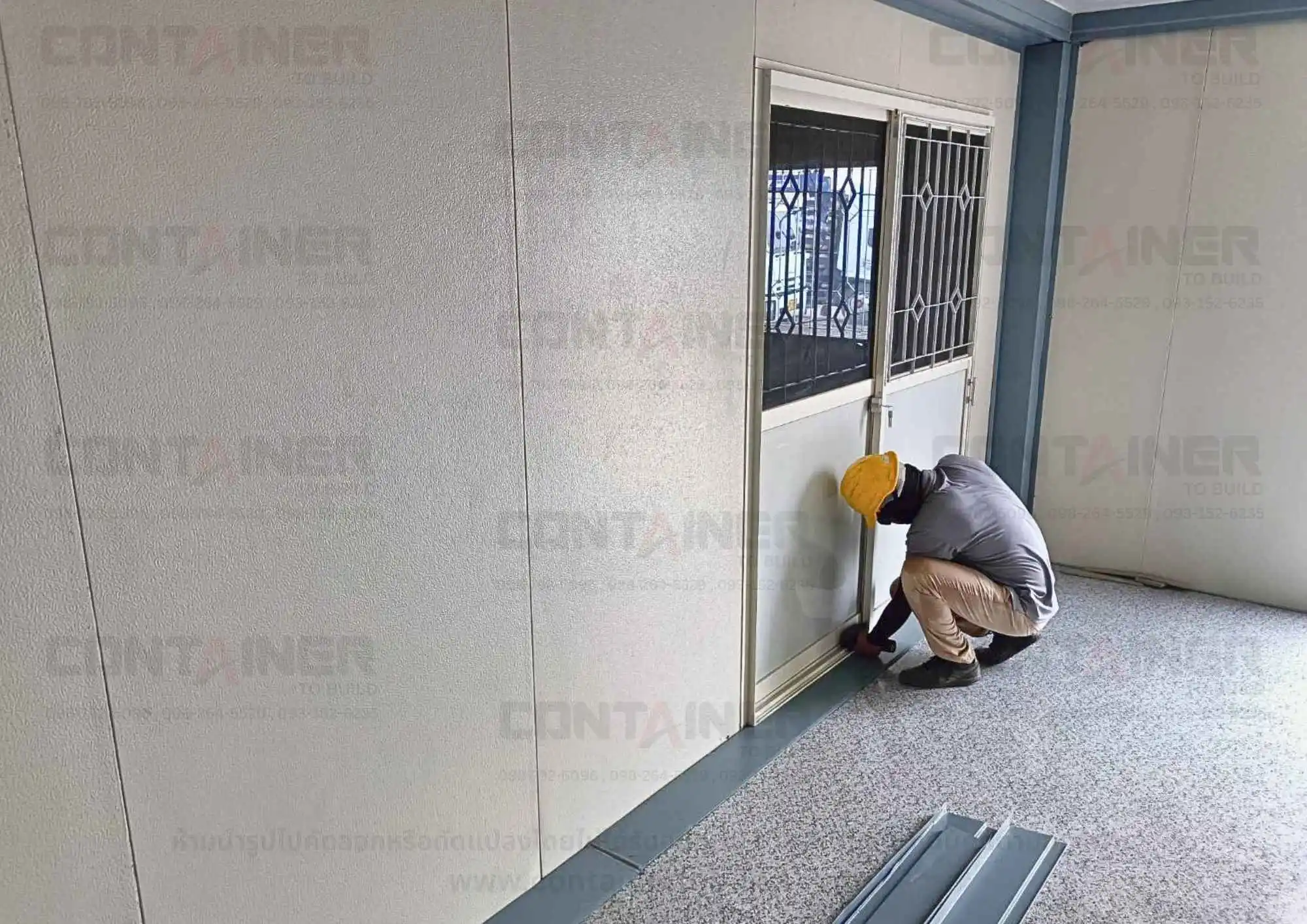
- Fast installation that saves time and labour (Rapid Installation): This is a key selling point for business owners. Instead of spending weeks building and plastering walls, sandwich panels can be installed as quickly as assembling Lego, thanks to locking systems (such as tongue and groove) that join together precisely. This fast installation means projects finish sooner, labour costs are saved, and operations or revenue can begin straight away.
- Comprehensive Safety Features:
- Fire resistance: PIR and rock wool cores have good fire-resistant properties. Good-grade PIR can meet fire standards (non-combustible or Class A fire rating), while rock wool is naturally non-combustible.
- Sound insulation: The multi-layer structure of the panel helps absorb and reduce the transmission of sound, making the interior quieter for noisy factories or buildings that need privacy.
- Resistance to the environment: The face sheets are usually plated or coated to protect against rust and chemical corrosion and to resist UV radiation, giving a long service life and easy maintenance.
- Eco-Friendly: At a time when carbon emissions are a major issue, sandwich panels reduce the water use and waste of construction (for example, no leftover mortar or broken bricks). Most importantly, they save energy on air conditioning continuously throughout the life of the building, which directly reduces the fuel burned by power stations. This is a genuine investment in sustainability.
A wide range of applications, beyond four walls: sandwich panels are no longer limited to warehouses or factories, but are increasingly part of our everyday lives.
- Industry and logistics: The main market, used to build warehouses and temperature-controlled cold storage because they maintain temperature efficiently.
- Commercial and public buildings: Used in shopping centres, supermarkets, theatres, indoor stadiums, and even offices that want to be modern and energy-efficient.
- Modern agriculture: Used to build poultry houses and barns that need temperature and hygiene control.
- Housing: Beginning to be used in modern homes, bungalows, or extensions that need to be built quickly without adding weight to the existing structure.
Looking to the future: the latest trends and innovations. Sandwich panel technology continues to develop without pause.
- Smart Panels: In the near future there may be panels with embedded sensors to monitor structural integrity, temperature or even water leaks.
- Circular design for sustainability: Research is under way into insulation cores made from recycled or bio-based materials, and into panels designed to be dismantled and reused at the end of a building’s life.
- Integration with Renewable Energy: Development of panels on which solar panels can be easily mounted, or even integrating the system directly into the surface of the panel (BIPV – Building Integrated Photovoltaics), turning walls and roofs into sources of energy.
Conclusion: stepping into a new era of smart construction
Thermal insulated sandwich panels are not just a passing trend, but have become a new standard for 21st-century construction. They are the right answer for anyone who needs performance, speed, overall value (life cycle cost) and environmental responsibility.
Choosing sandwich panels is not just choosing a material to build with, but an investment in the future – a future that is more energy-efficient, safer and more sustainable, for your business and for our planet. It is an important step that changes the mindset from “building to finish” to “building smart” from the very start.
About SBT Worldwide Product
SBT Worldwide Product is one of Thailand’s major manufacturers and distributors of container units, knock-down houses and prefabricated office units, with more than 25 years of experience.
- High-quality materials for reliable strength
- Japanese innovation
- Quality doors and windows from TOSTEM
- PU foam thermal insulation
Our products: mobile office units, worker accommodation, toilet units, guard boxes, container unit coffee shops, prefabricated shops
Rental services: office unit rental, container office unit rental, toilet unit rental, on both monthly and yearly terms
Container units remain an endlessly creative trend. When many people decide to build an office unit or a container house, their first priority is the design and the construction process, but there is another step that is just as important: “transport”. If you have questions about unusual designs, or would like to share your experience of using a container unit or a container office unit, don’t hesitate to leave a comment below, and don’t forget to follow our next article, which will take an in-depth look at container units and container office units and answer your questions, so you can keep finding inspiration.