Fiberglass Insulation: Budget Hero or Moisture Trap?
Published 16 Jan 2026 · Updated 2 Sept 2026 · 5 min read
In this article
Ever had this happen? You walk into a container in the afternoon and feel like you are stepping into an oven. Heat radiates in from the steel until the air conditioner can’t keep up. “Heat insulation” is therefore not an option, it’s a matter of survival! Today we take a deep dive into “fiberglass insulation”, the classic heat-insulating material, to see whether it really suits containers, and how to install it so that mould does not develop in the long run.
1. What is fiberglass insulation? Why is it so popular?
In short, it is finely spun glass fibre, rather like the cotton candy that many of us remember as a childhood treat, which is then pressed into sheets or rolls and faced with aluminium foil.
- Strengths: the most affordable option for its quality, easy to buy at building material shops, and good at “absorbing sound” (it reduces the noise of rain hitting a steel container roof to a certain degree).
2. The challenge: when “fiberglass” meets a “steel box” (The Moisture Trap)
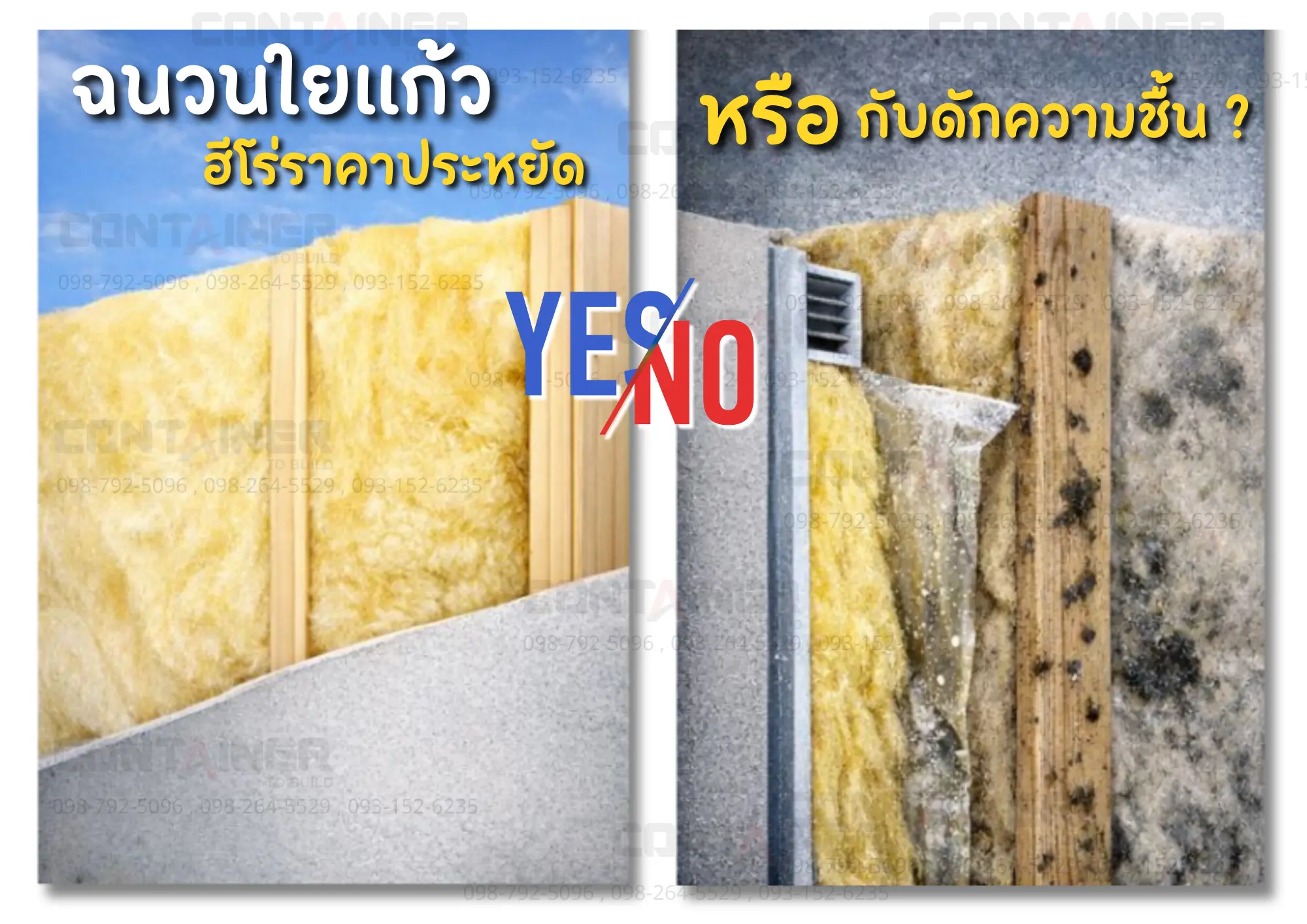
This part is very important. The moisture problem: a container is a steel box. When the cold from the air conditioner inside meets the heat outside, “sweat” or water droplets (Condensation) form on the container walls. Beware the “moisture trap” (The Moisture Trap)!
Before you buy and install it, you need to know that “a container is not the same as a concrete house”.
A container is a metal box. When we run the air conditioning cold inside while the sun is blazing outside, the temperature difference causes “water droplets” (Condensation), or sweat, to form on the inner steel walls.
Disaster strikes if… you stick fiberglass insulation directly against the steel wall and the water droplets seep into the insulation.
- The insulation absorbs water and compresses (immediately losing its heat-insulating properties).
- It becomes a breeding ground for black “mould” behind the wall without you knowing.
- The steel container walls rust from the inside.
- If installed incorrectly: if fiberglass insulation is left in direct contact with moisture, it compresses, its heat-insulating performance drops to 0 and it becomes a breeding ground for mould.
3. How to install fiberglass insulation in a container so it “survives” (The Right Way)
Here are the correct steps, step by step:
- Framing (Framing): you must build a frame (timber or C-section steel) to leave a gap between the container wall and the lightweight wall.
- Fill completely with insulation: pack the fiberglass insulation snugly into the framing cavities. Do not leave any gaps (Air gap) where heat can leak in.
- The key is a Vapor Barrier (moisture barrier sheet): before closing up with gypsum board or SmartBoard wall panels, you must lay a clear plastic sheet or moisture barrier over the face of the insulation as an extra layer, to stop moisture from inside the room seeping into the insulation.
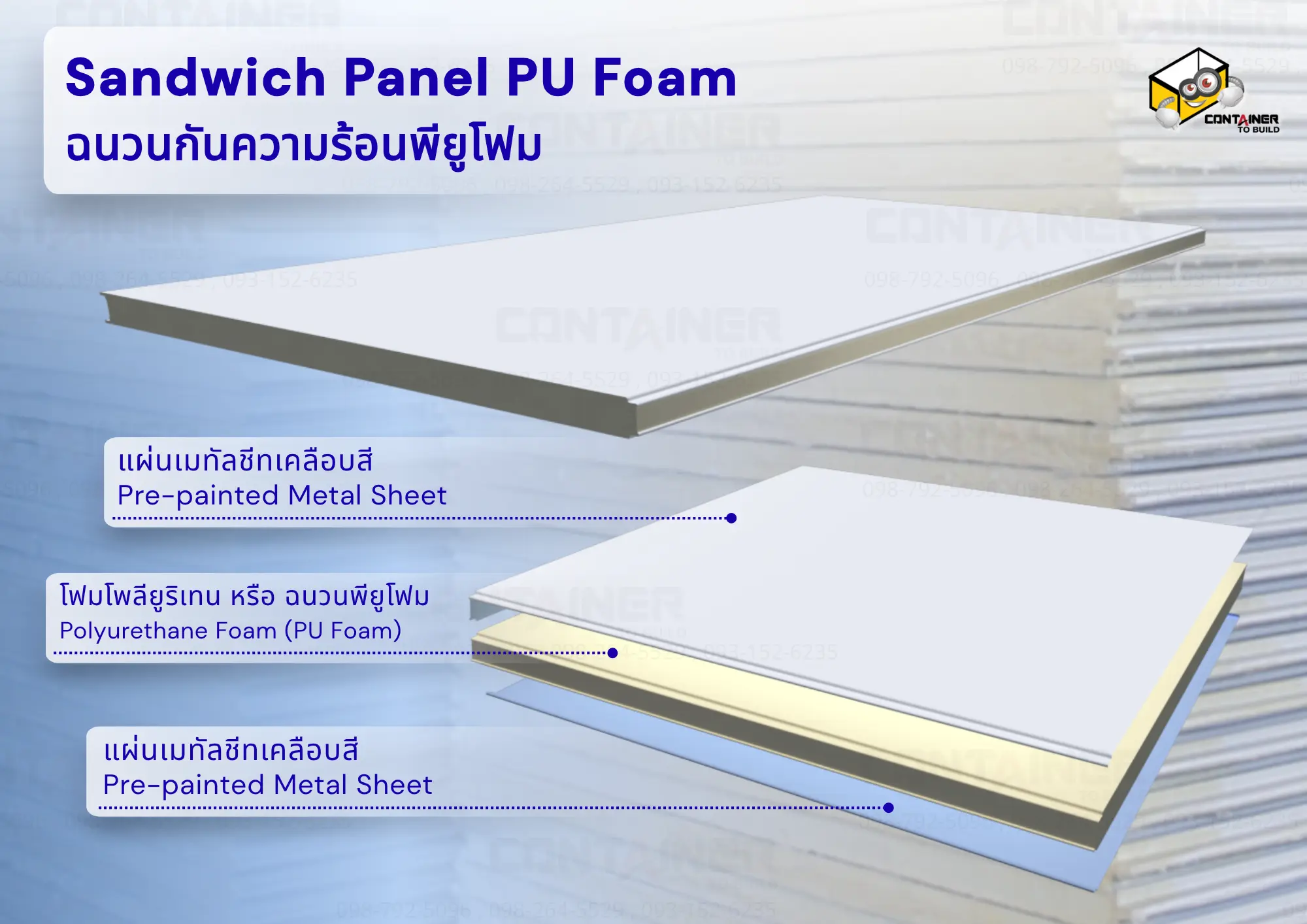
4. A clear comparison: fiberglass vs spray foam (PU Foam)
- Price: fiberglass wins (much more economical).
- Heat insulation: PU Foam wins (because it seals every leak much better).
- Installation: fiberglass can be DIY / PU Foam must be done by a professional spray installer.
Sound insulation: fiberglass is better at reducing echo.
Who is fiberglass insulation suitable for?
- People with a limited budget (Budget-friendly).
- DIY extensions, or hiring local tradespeople who are not experienced with foam-spraying equipment.
- A final thought: “Affordable and good really does exist, if it is installed correctly.” Using fiberglass insulation can save a lot of money, but you must never skip the Vapor Barrier step.
Although fiberglass insulation has advantages in price and sound insulation, it also has very important “disadvantages and precautions”, especially when used in containers. Not knowing these points could ruin your home or harm your health in the long run.
1. Irritates the skin and respiratory system
This is the most obvious disadvantage of fiberglass insulation.
- Symptoms: the tiny glass fibres are sharp. On contact with the skin they cause itching, irritation and red rashes.
- Danger: inhaling fiberglass dust may irritate the nose, throat and lungs.
- Solution: installers must wear fully covering clothing, an N95 mask, safety goggles and gloves throughout installation.
2. Severely vulnerable to “moisture”
Fiberglass insulation is porous, like a sponge.
- Problem: if water leaks in around a container window frame, or “sweat” (Condensation) forms on the steel wall, the fiberglass absorbs that water.
- Impact: once wet, the fibres compress (Matting), losing almost all of their heat-insulating value, and worse, it becomes a home for mould, which gives off a musty smell throughout the house.
3. Cannot seal air leaks (Non-Air Sealing)
Unlike spray foam (PU Foam), which expands after spraying to fill every crack:
- Problem: fiberglass insulation is just a sheet laid in place. If your container has leaks along the steel seams or holes drilled for air-conditioning pipes, heat and humid air from outside can easily “flow through” the gaps around the insulation.
4. A home for “rats and insects”
Rats love fiberglass insulation!
- Problem: its fluffy softness is a nesting paradise for rats and cockroaches. If they get behind the lightweight wall, they will gnaw holes in the insulation and leave droppings that smell, and tearing out the wall to clean it is a very big job.
5. Performance declines over time (Settling)
If it is not installed well enough (e.g. not stretched taut or without a secure supporting frame):
- Problem: over the years, gravity may cause the insulation sheets to “slump down and pile up at the bottom” of the wall, leaving the upper wall with no heat insulation, just bare steel sheet exposed to the sun.
6. Short service life
In a humid environment or if installed incorrectly, the service life of fiberglass may be shorter than in an ordinary concrete house. On average it may start to deteriorate within 5-10 years, while high-grade foam boards or spray foam may last longer.
If you are looking for an insulation installer or want advice on planning container wall systems, the Container to Build team is ready to help.
About SBT Worldwide Product
SBT Worldwide Product: a major Thai manufacturer and distributor of container units, knock-down houses and prefabricated office units for more than 25 years
- High-quality materials you can trust for strength
- Japanese innovation
- Quality doors and windows from TOSTEM
- PU Foam heat insulation
Our products: mobile office units, worker accommodation, toilet units, guard boxes, container unit coffee shops, prefabricated shops
Rental services: office unit rental, container office unit rental, toilet unit rental, on both monthly and yearly terms
Container units remain an endlessly creative trend. When many people decide to build an office unit or a container unit house, their first priority is the design and the construction process, but there is another step that is just as important: “transport”. If you have questions about new and unusual designs, or want to share your experience of using a container unit or container office unit, feel free to leave a comment below, and don’t forget to follow our next article, which will take a deep dive and clear up your questions about container units and container office units so that you stay continuously inspired.