Characteristics of Shipping Containers
Published 7 Jul 2023 · Updated 2 Sept 2026 · 4 min read
In this article
Getting to know the “container” beyond what you see… it’s not just for shipping goods
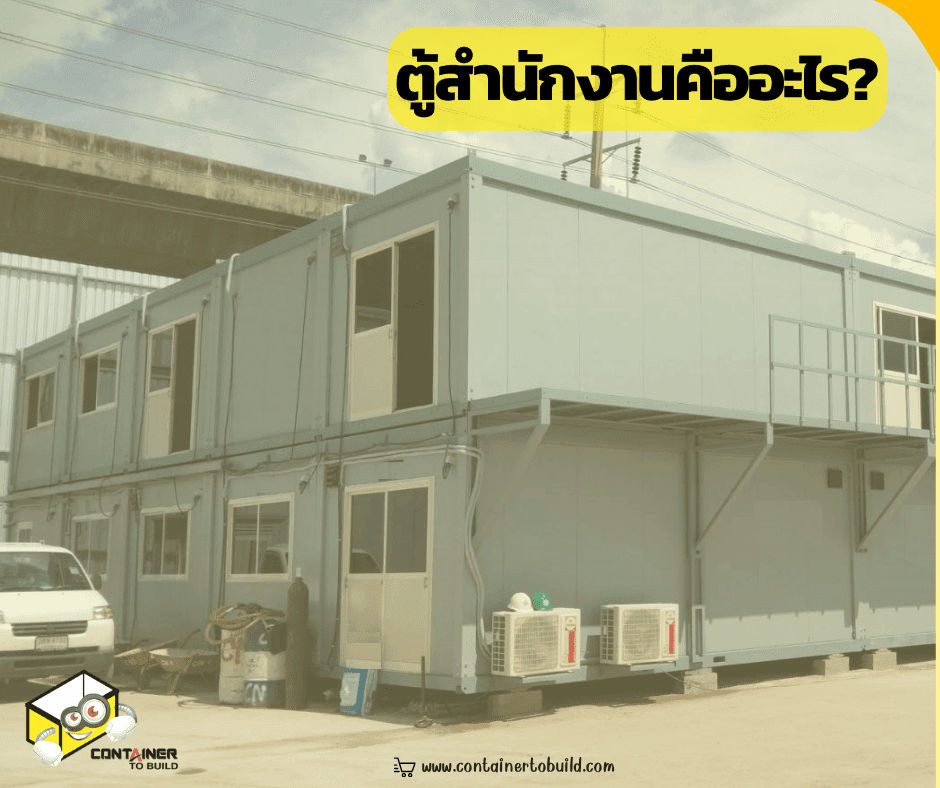
When people talk about a container (shipping container), many think of the huge steel boxes lined up on ships or at ports, but in fact containers play a far more important role than that. They are at the heart of the international freight system, and today they are also adapted for many other uses, such as office units, living units, storage rooms, shops and prefabricated buildings.
What is a container?
A container (Container Box) is a box designed and built to hold goods for transport, especially shipping by sea, which involves long journeys through a variety of environments.
A container’s job is therefore not just to “hold goods”. It must also be able to protect the goods, withstand lifting and handling, and endure the environment during transport effectively.
Containers come in many sizes, forms and types, so the choice should take into account the type of goods, the volume of goods, the weight and the mode of transport.
From the factory… to ships crossing borders
The process of shipping goods by container begins with loading the goods into the container, known as Stuffing. The container is then moved to the port and lifted onto a Container Ship, a vessel designed specifically to carry containers.
Using a container system allows large volumes of goods to be shipped systematically, reduces handling steps and improves safety along the entire transport route.
Especially for sea freight, which may take weeks or longer, choosing the right container for the goods is important, because each type of container has different properties and limitations.
Why are “containers” so popular?
The key strengths of containers are their strength, ease of transport and the variety of ways they can be reused.
With a structure designed to be lifted by crane and moved by truck, a container can travel from the factory to the port, from the port to another country and on to its final destination without the goods having to be unloaded from the original container along the way.
This is why the container system has become one of the most important standards in global freight.
What are the characteristics of a container?
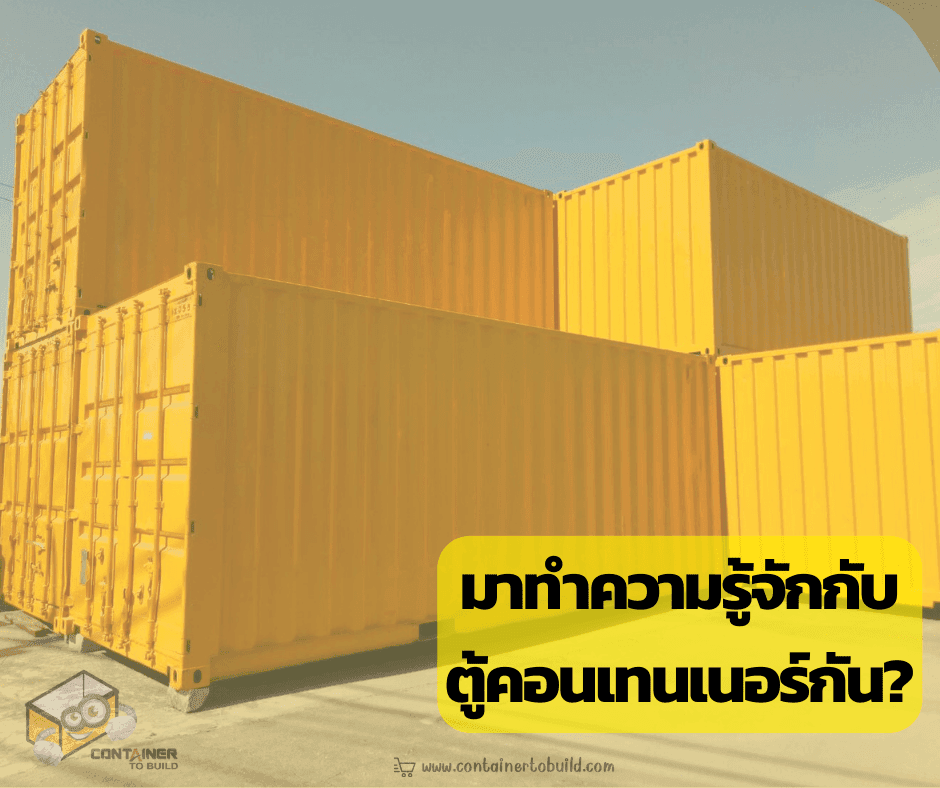
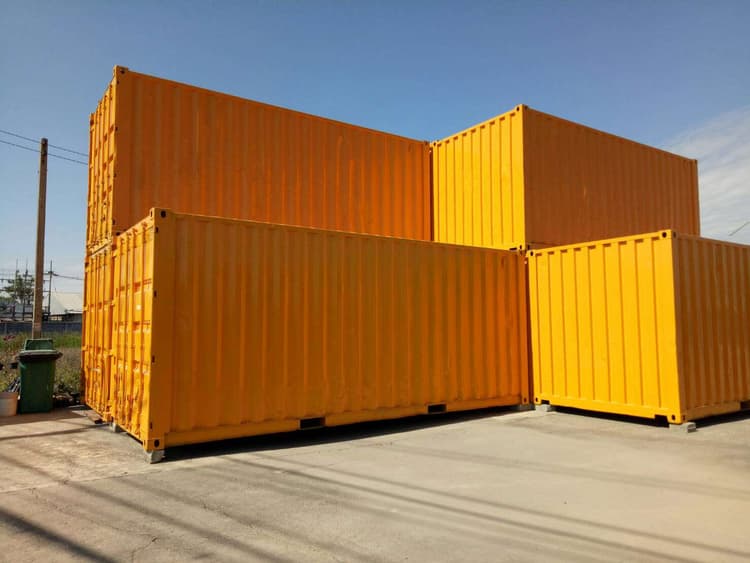
We have probably all seen containers often enough to be familiar with them: they look like large steel boxes, come in many colours and have wide doors for convenient loading of goods.
Today, containers that are no longer in use, or newly built ones, are also being adapted for various kinds of living spaces.
Containers used for shipping goods have the following characteristics:
- They are standard-sized boxes
- They have a strong outer structure, which may be made of steel or aluminium
- The inside is an open, spacious box for holding goods
- They can be stacked no fewer than 10 high
- When stacked, each container is locked to the next
- Most have 2 doors
- The outside has vertical corrugations
- They have door locks so they can be closed tightly and securely
For sealing container doors, today we use an Electronic Seal, which makes it possible to track the location of the container as it moves. In addition, containers carry details about the shipment, such as the container number (Container Number) or the maximum payload weight. These are the basic characteristics of the containers we use today, and they continue to be developed.
Containers used in sea freight include:
- Dry Container
A standard container suitable for general goods that do not require temperature control during transport. It is also the most widely used type of container, comes in several sizes and is highly durable, making it suitable for dry goods, electrical appliances, clothing and so on. - Reefer Container
A container fitted with a refrigeration unit and a thermometer showing the temperature inside. It can keep the temperature inside the container constant throughout transport, making it suitable for goods such as meat, seafood, fruit and ice cream. - Open Top Container
A container designed with an open top and no roof, suitable for extra-tall goods that cannot be moved through the container doors, such as machinery, various pipes, construction materials or extra-tall vehicles. - Flat Rack Container
A container with a flat floor, open at the top and sides, with a base for extra-large, extra-wide or extra-tall goods, such as machinery, various pipes, construction materials or extra-wide, long or tall vehicles. - ISO Tank Container
A container designed specifically to hold liquids. Its key structure consists of a base frame with posts at all 4 corners, with a long cylindrical steel tank permanently mounted on the base, allowing it to be stacked and moved easily. It is suitable for liquid goods such as beverages, food, oil and chemicals. - Ventilated Container
A container that looks like an ordinary one but has ventilation openings around it, suitable for goods that need ventilation, mostly agricultural products such as cocoa beans, coffee beans and certain fruits.